This was a web comic I saw and it made me think of my time in EDM310, what we learned about what teachers have to go through in the classroom and the amount of work it takes to be a teacher. This also shows the rewards.
You can find it here.
Monday, June 30, 2014

Sunday, May 4, 2014
Project 16 ibook

Project 16 was our iBook that we created as a group about the things we did in class. It was done collaboratively as a group and has what we believe to be our best work. Thanks to the rest of the Spartan Group for making this semester fun and enjoyable!
Blog Post #15 Final Reflections
This semester has been a fun time in EDM 310. I've learned many things not only about education but also about the different types of technologies that have come about in the world that I was unaware of. It was a good experience to go and read the blogs of the teachers, and it was fun to comment on the blogs of younger students. I hope to maintain what I have learned in this class for the future.


Sunday, April 27, 2014
April C4K
This month I continued to post on the Pt. England School Blog.
My first student was Christian, and his post was about Fiafia, which apparently means "happy." He goes on to explain that it is a festive day in which one celebrates different cultures, and is a day to be happy. What I find most amazing his statement "Did you know that I think relating to others is the one key competencies that you need at fiafia?" How amazing is it that this boy thinks that relating to others, despite their cultural differences, is a key aspect someone needs.....to be happy? If only certain people in the world could figure this out the world would be a bit better to live in.
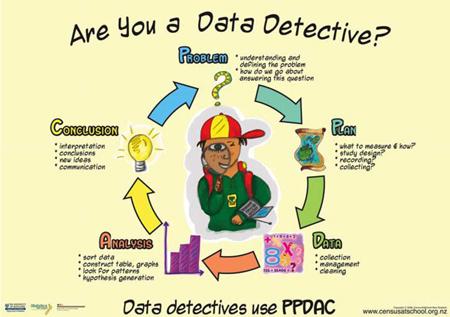
My Second student was Russel, and his post was about an exercise in Investigation. It was a rather simple project, but one he decided to take a bit of a humorous twist on it. He decided that he wanted to investigate how many burbs he and his father can do in 30 seconds. His father ended up winning. It was a good hands on project that demonstrated the skills of data collection and recording, and had the students create a slide presentation with their finding on it.
I did not get a third child, or if I did I miss them again....
My first student was Christian, and his post was about Fiafia, which apparently means "happy." He goes on to explain that it is a festive day in which one celebrates different cultures, and is a day to be happy. What I find most amazing his statement "Did you know that I think relating to others is the one key competencies that you need at fiafia?" How amazing is it that this boy thinks that relating to others, despite their cultural differences, is a key aspect someone needs.....to be happy? If only certain people in the world could figure this out the world would be a bit better to live in.
My Second student was Russel, and his post was about an exercise in Investigation. It was a rather simple project, but one he decided to take a bit of a humorous twist on it. He decided that he wanted to investigate how many burbs he and his father can do in 30 seconds. His father ended up winning. It was a good hands on project that demonstrated the skills of data collection and recording, and had the students create a slide presentation with their finding on it.
I did not get a third child, or if I did I miss them again....
C4T #4
For C4T I had the pleasure and joy of reading the blog of Scott McLeod titled Dangerously ! Irrelevant . So why is this a pleasure? For one, McLeod tackles some issues of technology, two of which I will mention here, and attempts to bring light to the darkness of technology in education. Much like Dr. Strange, McLeod is enthused about the use of technology in the classroom and wishes to see it grow to its greatest potential. However, he warns us of things that even in EDM 310 we have not been warned about.
This first one he warns us about is the over flooding of technology in the market. In his post 60 apps in 60 seconds we see what he means. He warns us that at education conventions and seminars that teachers go to they get bombarded with information quickly and often. This gets to the point where teachers can become easily overwhelmed with information and with apps that are no different then a previous version, they are just simply....new. The video gives a brief description with each app, but only from the view point of a teacher who sees it for the first time. Notice how there is no information, no quality discussion or lecture that goes with it......just apps. How many apps do we truly need for math? English? History? While it is true that usually the newest piece of technology is the best, is that the same for apps? With how easily they are made it is easy to accept that the newest app for education is no better, or different, then the previous one. He recommends that people who are creating apps spend less time working on quantity and more time on the quality of the presentation. It can also be said that teachers should indeed do their research and look at the apps before deciding to use them or change to them, they may not be worth the time.
The second blog post, titled Replication or Empowerment, talks about how we have to decide how we want technology to advance in the class. He says "We’ve got to decide if our vision for educational technology is around replication or empowerment. And if it’s about empowerment, then guess what? We’ve got to give up the things that we do that feed replication. We can’t hang on to all of those and get to where we’re trying to go." I'm not sure what he means by Replication vs. Empowerment, but he puts up a video (shown below) of a TEDTalk that he did where he talks about Fear vs. Empowerment. The basic idea of the talk is that we can't be afraid of technology or what they can do. He says that we do everything in our power to get the technology into the hands of students, but then do everything we can to limit what they can do with them. There is such a thing as to much protection, to where you limit the tools that technology is suppose to be. He talks about how kids, from ages 8 to 15, are using technology in ways to help change the world. From a Foodie Blog in Scotland that rates her school's lunch food to a boy who does his own voice over play through of Pokemon games. He points out that there are millions of kids like this in the world, but they aren't allowed to do what they want with technology....because teachers and parents are afraid of what might go wrong, instead of empowering their students with the hopes that something goes right.

Sunday, April 20, 2014
Blog Post #13
Literature in the 21st Century World of Technology
Has technology changed the role of literature in our culture?
Here are some resources that you can use to get an idea. Research some of your own and write what you think about Literature in the 21st Century World of Technology.
Preserve Articles
10 Technologies that Changed Literature
Digital Literature
So how has technology changed the role of literature in our culture. To some people, the world has grown to the point that literature is no longer a necessary part of our culture. With science and math as the forerunners in school and in the job markets, what good does art, music and literature do for a person? According to the article Role of Literature in Technological World "Science provides knowledge and power and both science and technology affect human life at several points, though the extent and utility of the applications are determined by our culture, our wisdom and our priorities. Literature reflects the moods and emotions of the times in which it is produced; it is conditioned by the reflexes which, in turn, are created by the impact of science and technology." Here we see that Science and Literature are on two separate paths, and some say that traveling down one path closes the other. However, we must remember that technology is not a new term. Technology has changed the way literature has been handled for generations. The website 10 Technologies that Changed Literature gives a clear view that some of the things we take for granite helped shape Literature as we know it, so it would make sense that the technology we are seeing today is just the next step in that. Literature, Art and Music will always be apart of our culture and our society, even if it seems that they are fading away. With the advancement of Science and Math new technologies are being created that can be used to help expand them.
Sunday, April 13, 2014
Blog Post #12
What assistive technologies are available to you as a teacher? That is a great question, and one that deserves a bit more attention then a single blog post can give. However, the first step to this is to understand what assistive technologies are. So, what are they? According to that Assistive Technology Industry Association, ATiA, Assistive technology is "any item, piece of equipment, software or product system that is used to increase, maintain, or improve the functional capabilities of individuals with disabilities". They are quick to let us know that assistive technologies can be anything from low tech communication boards made of fuzzy felt to specialized curricular software. They state that making the decision on what assistive technologies you use is not a decision made by yourself, but rather with a team of professionals and consultants. One of the things we can not let get in our way as teachers is the idea that we know everything. By doing that we could end up making a wrong decision that does not help the student, but could also hinder or hurt them in future education. So what is available for us to use as teachers? The fuzzy felt communication boards sound awesome, but not practical. The more practical tools are things like iPads and Tablet PCs. With programs that can read out event he names of the apps on the devices, it is getting to the point where technology will no longer be an issue for the deaf or the blind. However, it is still a struggle. In the video Teaching Mom What Her Deaf/Blind Child Is Learning On the iPad, we see that a mother is learning how to use an iPad in the way that her child would be using it. Despite being hilarious, it is a very informative video and shows the difficulties not only in operating the device, but also the difficulties in using the device in the ways necessary for some one with disabilities. In the video Teaching Math to the Blind we get to see how these assistive technologies are being used, and how they are making a difference to the students in the class room. It's scary to think of, but we may have to deal with students who need assistive technologies. While it is not our job to understand in full detail how they work, it is our job to be knowledgeable about them and how to incorporate them into our teaching.

Sunday, April 6, 2014
C4T #3
This time around I got a Kindergarten Teacher, Mr. Matt Gomez. He has some interesting discussions about technology, including using them as a way to share learning experiences and how to use something like Twitter.
Handling Twitter was the first post that I commented on. While he did not directly talk about how to use Twitter in a direct fashion, he did post a lot of links to resources that could be helpful to future teachers who might want to use Twitter in some direction. That post can be found here.
The second post was a little more in depth, in that it handles a serious issue. He hosts his own Google Hang Out, called Region 10, and posts the videos on Youtube. In this one, he discusses the idea of shared learning experiences, and how technology can be used to help support and amplify that. He also spends some time on security, and ensuring that the students are safe while sharing online. We have talked about is it possible for students to get into places that they should not be, and how do we prevent that. Well, thankfully we have things like iCurio that help with searching online for information. There are also security passwords that can be placed to lock out certain website, and other programs that can prevent things from being downloaded. We can restrict the use of online access, only letting students get on while we are moving around the room keeping an eye on them.
C4K
Unfortunately, my computer had an issue and I lost all my saved bookmarks...maybe I should really use Delicious. So, I only have one of the links to comment on.
The last student I was given to review was Nathanial's class blog. Nathanial goes to PT England in Auckland, NZ. The post that I commented on gave a brief history on the school, and told his readers about the school. I think it is important that students know about the history of the school that they go to school, to appreciate it more.
The last student I was given to review was Nathanial's class blog. Nathanial goes to PT England in Auckland, NZ. The post that I commented on gave a brief history on the school, and told his readers about the school. I think it is important that students know about the history of the school that they go to school, to appreciate it more.
Blog Post #11
Our group collaborated together via Google Docs, and split the work amongst the four of us. It is interesting to finally see our opinions, the way we present information and how we handle certain things side by side with each other. We have been talking about creating a "Think Tank" for the future, and I am hopeful that I will be able to use my team members as parts of mine.
Video #1
I watched Brian Crosby's video, and it has some awesome stuff discussed. To begin with, he talks about how he deals with students that are not high in knowledge, not just because of their grade level (4th) but instead because most of them did not even know what country they lived in. He talks about a weather balloon project that they did in class and the different aspects that went along with it. Not only did it have science and math, but also some language arts and literary aspects. The students were engaged throughout the entire project, and learning became a serious experience to them. Using the web to talk to people, conduct research and even give presentations about the project to other classes across the globe the students had their work cut out for them. The coolest part to me was when his class got to teach another class, in New Zealand, how to do the "Can Crush" science project. - Gregory Olson
Video #2
Paul Andersen teaches AP Biology at a high school in Bozeman, Montana. His video may only be ten minutes long, but it is packed with valuable information. He introduces his style of teaching as a blended learning cycle. He combines blended learning and its three components: online, classroom, and mobile with a learning cycle that aims to engage, explore, expand, explain, and evaluate. He created a mnemonic device to remember the steps of his blended learning cycle. He uses the word quiver. First he presents a question. Second, he encourages inquiry/investigation. Third, he uses video to further explain his topic. Fourth, he elaborates upon the material. This step involves reading and being able to pull valuable, relevant material from text. Next, he reviews his students in small groups so that he can verify that they fully understand the material covered. Finally, once all other steps are reached, he tests his students with a summary quiz over a few units. This was a very helpful video that I'm sure I will be looking back to for inspiration in the future. - Mitchell Lane
Video #3
This video by Mark Church is a promotion for his book Making Thinking Visible. In this video Mark has put his students into groups and encourages them to talk about what they have learned up to this point. While they are discussing the topic the students are to come up with a headline about what they have learned. Mark then states that after a couple of weeks they will revisit the headlines and see what headline they would now come up with. This was a very interesting way of getting students involved in a project. I believe that this would be a good way to get the students interested at the very beginning of a project to see how time and a little more learning about a subject can change their outlook on things.- John McPeek
Video #4
Sam Pane is a 5th grade teacher at Wilson Focus School in Nebraska, Tennessee. In the video, Sam Pane is teaching his students on how to be good “digital natives”, denizens, or, frequent users of the internet. To teach his students how to be good digital natives, he has his students create their own webcomic that stars a superhero that they themselves create via a online program that allows you to create a superhero. I think that is perhaps the best idea for a lesson EVER. Seriously, I wish I could have done neat stuff like that when I was in elementary school. Shoot, I make my own superheroes every now and again already, it’d be something I’m already awesome at, heh. The hard part though is coming up with a good name for your hero or heroine. This just further reinforces the fact that if you make lessons fun, it’ll make children become much more engaged and passionate about whatever it is they’re learning, mostly because it won’t really feel like learning. Also, by having your students create something, it instills a sense of ownership, a sense of pride in whatever it is they’re creating. - Jeffrey Brazeal
Video #5
In a video called Project Based Learning by Dean Shareski, we get to see yet another classroom that is fully utilizing Project-Based Learning. In this classroom, multiple subjects are actually combined. So, students aren’t participating in a class that is divided up into “periods” or “blocks”. It’s all one classroom that is being taught by three or so teachers. It’s a very interesting system, though the teachers do talk about how difficult it was to put such a system in place. But, it was worth it. This video further proves just how effective Project-Based Learning is (as though you really needed more proof, heh). - Jeffrey Brazeal
Video #6
In this video Roosevelt Elementry highlights their Project Based Learning teachers and students. They talk about all the aspects of PBL that help the children grow. One of these aspects that they highlight is that of public speaking. PBL really helps in these lower level classrooms to get children comfortable speaking to groups. Another thing that is highlighted in this video is collaborative work. This skill is a great thing to teach at this early level of learning because it’s what most adults have to do at work anyhow and to learn how to do it effectively and efficiently at this age can only help the students as they grow and learn. The last thing that is highlighted is how much the students enjoy it. The video has parents of children that are in the class tell of how it is helping their child and how much their child is learning using this method as well as how much they enjoy PBL. The aspect that children are loving PBL is what has brought me to believing how powerful a learning tool it can be. - John McPeek

Video #1
I watched Brian Crosby's video, and it has some awesome stuff discussed. To begin with, he talks about how he deals with students that are not high in knowledge, not just because of their grade level (4th) but instead because most of them did not even know what country they lived in. He talks about a weather balloon project that they did in class and the different aspects that went along with it. Not only did it have science and math, but also some language arts and literary aspects. The students were engaged throughout the entire project, and learning became a serious experience to them. Using the web to talk to people, conduct research and even give presentations about the project to other classes across the globe the students had their work cut out for them. The coolest part to me was when his class got to teach another class, in New Zealand, how to do the "Can Crush" science project. - Gregory Olson
Video #2
Paul Andersen teaches AP Biology at a high school in Bozeman, Montana. His video may only be ten minutes long, but it is packed with valuable information. He introduces his style of teaching as a blended learning cycle. He combines blended learning and its three components: online, classroom, and mobile with a learning cycle that aims to engage, explore, expand, explain, and evaluate. He created a mnemonic device to remember the steps of his blended learning cycle. He uses the word quiver. First he presents a question. Second, he encourages inquiry/investigation. Third, he uses video to further explain his topic. Fourth, he elaborates upon the material. This step involves reading and being able to pull valuable, relevant material from text. Next, he reviews his students in small groups so that he can verify that they fully understand the material covered. Finally, once all other steps are reached, he tests his students with a summary quiz over a few units. This was a very helpful video that I'm sure I will be looking back to for inspiration in the future. - Mitchell Lane
Video #3
This video by Mark Church is a promotion for his book Making Thinking Visible. In this video Mark has put his students into groups and encourages them to talk about what they have learned up to this point. While they are discussing the topic the students are to come up with a headline about what they have learned. Mark then states that after a couple of weeks they will revisit the headlines and see what headline they would now come up with. This was a very interesting way of getting students involved in a project. I believe that this would be a good way to get the students interested at the very beginning of a project to see how time and a little more learning about a subject can change their outlook on things.- John McPeek
Video #4
Sam Pane is a 5th grade teacher at Wilson Focus School in Nebraska, Tennessee. In the video, Sam Pane is teaching his students on how to be good “digital natives”, denizens, or, frequent users of the internet. To teach his students how to be good digital natives, he has his students create their own webcomic that stars a superhero that they themselves create via a online program that allows you to create a superhero. I think that is perhaps the best idea for a lesson EVER. Seriously, I wish I could have done neat stuff like that when I was in elementary school. Shoot, I make my own superheroes every now and again already, it’d be something I’m already awesome at, heh. The hard part though is coming up with a good name for your hero or heroine. This just further reinforces the fact that if you make lessons fun, it’ll make children become much more engaged and passionate about whatever it is they’re learning, mostly because it won’t really feel like learning. Also, by having your students create something, it instills a sense of ownership, a sense of pride in whatever it is they’re creating. - Jeffrey Brazeal
Video #5
In a video called Project Based Learning by Dean Shareski, we get to see yet another classroom that is fully utilizing Project-Based Learning. In this classroom, multiple subjects are actually combined. So, students aren’t participating in a class that is divided up into “periods” or “blocks”. It’s all one classroom that is being taught by three or so teachers. It’s a very interesting system, though the teachers do talk about how difficult it was to put such a system in place. But, it was worth it. This video further proves just how effective Project-Based Learning is (as though you really needed more proof, heh). - Jeffrey Brazeal
Video #6
In this video Roosevelt Elementry highlights their Project Based Learning teachers and students. They talk about all the aspects of PBL that help the children grow. One of these aspects that they highlight is that of public speaking. PBL really helps in these lower level classrooms to get children comfortable speaking to groups. Another thing that is highlighted in this video is collaborative work. This skill is a great thing to teach at this early level of learning because it’s what most adults have to do at work anyhow and to learn how to do it effectively and efficiently at this age can only help the students as they grow and learn. The last thing that is highlighted is how much the students enjoy it. The video has parents of children that are in the class tell of how it is helping their child and how much their child is learning using this method as well as how much they enjoy PBL. The aspect that children are loving PBL is what has brought me to believing how powerful a learning tool it can be. - John McPeek
Project #10: Interview
This is the interview I had with my cousin Mrs. Dana Dumont, who teaches 2nd grade at Saint Ignatius Catholic School here in Mobile, AL. First time using my phone to record a movie, so I wasn't sure as the to the angel of it. Not bad for a first time!
Sunday, March 30, 2014
Project #15
The feed back I got called for me to do a Rubric. So, here is the lesson plan with the Rubric!
Project Overview
Project Calender
Project Rubric

Project Overview
Project Calender
Project Rubric
Blog Post 10: Sir Ken Robinson: Bring on the Revolution!
This week we got the privilege of listening to Sir Ken Robinson TED Talk about his view on how and why the Education system should be changed. The part that spoke to me is when he said "Human communities depend upon a diversity of talent, not a singular conception." The reason for this is because I have had people in my ear for a while telling me how useless Liberal Arts and English was, and have even told me that the Liberal Arts are no longer needed in society....that we just need Math and Science. While I understand that Math and Science are important for society to expand into the future, a civilization without culture is a dead civilization. Literature, Poetry, Music and Painting are more than just a passing fancy to be dealt with when a person is finished finding the next equation or discovering the next planet, they are something that needs to be fueled inside children and students. As teachers, we need to be aware that not every student is going to be the next Einstein or the next Newton, but rather may be the next Poe of Hawthorne. In the drive for more Scientists and more Mathematicians, we are drying up the well of other creative minds and potentially diverting others away from what their joy may be. It is not a single person's job, and it must be something that becomes apart of the this "Revolution" that Sir Ken Robinson talks about.

Friday, March 28, 2014
Project #9
Here is my project #9. We had a bit of delay because of a technical difficulty, and Dr. Strange had given us an unknown-duration time extension. The Sparta Group discusses Chapter 6 of Mark Prinsky's book "Teaching Digital Natives."

Sunday, March 23, 2014
Blog Post #9
This week we watched a video made to inform us about Mrs. Cassidy's first grade class, as well as a set of videos showing an interview between a previous EDM310 class and Mrs. Cassidy. In the class room video, we got the privilege of being told by the students what they do in class, and how they use the technology that they are being given. Whether or not they fully understand what they are doing, it is still impressive that they understand enough to explain it. The part 1 video was interesting, just to because we got to hear a bit more about what it is like in the current classrooms. I graduated 10 years ago, so when she talks about that she has been dealing with technology since then I can imagine how much technology has changed in the past 5 years, lets alone 10. It was a bit reassuring to see that someone who hadn't grown up with technology, as some of us have, handle the change so well. One of the fears that I have is that technology will advance so fast that the rate of change maybe difficult to keep up with. In part 2 of the interview, she talks about using technology in your personal life and what types of technology you should truly learn to use. Her advice was to stick to what you like, and only figure out in depth the technologies that are connected with what you like. In part 3 she is quick to remind us that the technology we are discussing, like the internet, is a tool, and as teachers we must be vigilant in ensuring that they are used for such purposes only.

Sunday, March 16, 2014
C4T #2
For the second C4T assignment I was given was David Wee's blog The Reflective Educator. He is a Formative Assessment Specialist for Mathematics at New Visions for Public Schools in NYC. In his blog, he discusses different aspects of life inside and outside of school that he has noticed mathematics can be used in. I am an English student and have had very little success in math. So unfortunately some of the blog posts he makes, mostly ones dealing with equations, were hard for me to understand.
In his most recent blog post, however, he discusses assessments that may eventually be used in New York City. What I found interesting in this is that he mentions an idea that seems almost project base learning, saying "What I think is missing is an opportunity for students to demonstrate the complete range of what it means to do mathematics, including asking questions themselves that they answer,[..]." He does state that it is still better then most assessments that he has dealt with before, and hopes that he would be able to use something similar in the future.
An earlier post was a way of teaching fractions that, even to me, made perfect sense. He says that he noticed that a lot of students he was tutoring were having problems with fractions, so he came up with a way of teaching them. That way was using a visual representation, via boxes on a chart, to describe how to add or subtract fractions. Instead of just teaching them formulas or the rules, he shows them a visual and physical representation of what is going on. That is a hands on way of learning that I think many students would benefit greatly from.
In conclusion, I will keep coming back to Mr. Wee's blog, even though I am out of my league when it comes to mathematics. Perhaps, in some weird way, I may learn something new myself.

In his most recent blog post, however, he discusses assessments that may eventually be used in New York City. What I found interesting in this is that he mentions an idea that seems almost project base learning, saying "What I think is missing is an opportunity for students to demonstrate the complete range of what it means to do mathematics, including asking questions themselves that they answer,[..]." He does state that it is still better then most assessments that he has dealt with before, and hopes that he would be able to use something similar in the future.
An earlier post was a way of teaching fractions that, even to me, made perfect sense. He says that he noticed that a lot of students he was tutoring were having problems with fractions, so he came up with a way of teaching them. That way was using a visual representation, via boxes on a chart, to describe how to add or subtract fractions. Instead of just teaching them formulas or the rules, he shows them a visual and physical representation of what is going on. That is a hands on way of learning that I think many students would benefit greatly from.
In conclusion, I will keep coming back to Mr. Wee's blog, even though I am out of my league when it comes to mathematics. Perhaps, in some weird way, I may learn something new myself.


Blog Post #8: 21st Century Technologies for learning and communication
When someone gives you the task to search out and find new technologies for learning and communication, especially ones you haven't covered in a class, you tend to get a little scared as a lot of your options fall out. So, I have decided to go out on a limb and try my hand at presenting a technology that we currently have, in a light that may be used for learning and education. What is that technology you ask? Well, it is the Video Game.
"Wait, what?!" some of you might be asking. It is okay, we do not need to bring out the pitch forks just yet. Where am I going with this? “When people learn to play video games,they are learning a new literacy.” That is a quote from James Paul Gee in his 2003 book Video Games Have to Teach Us About Learning and Literacy. He later goes on to describe video games as a "situate meaning in a multimodal space through embodied experiences to solve problems and reflect on the intricacies of the design of imagined worlds and the design of both real and imagined social relationships and identities in the modern world." So how does this deal with education? We have learned that the old methods of teaching are not workable anymore, they are outdated and are quickly being replaced. Why is this? Information is easier to access, and at a faster pace. In terms of literature, with "audio-books" and "online discussions" about the book, it can almost get to the point where a student does not have to read the book to get understandings from the book. The argument has been made that the reason why video games will never educational is because they are too fast pace.
In the Blog The American Conservative we see this argument in the statement "The novel is an adult medium that is slow moving, not stimulus-intensive, and demanding of contemplative silence and reflection. Video games are overly stimulating—visually, aurally, and physically—and they require frantic interaction." I argue that games are a different form of a novel, much akin then different. Would we all agree that there are differences between a short story and a novel? Can the same be said about games? Is there a difference between the Mario franchise and the Mass Effect series?
What I am getting at here is that more and more video games are developing story lines, interlocking ideas and concepts. No longer is it simply just about getting to the other side of the map to acquire points, but rather we have stories about a conflict of controlling man's future vs. the freedom to do as one pleases (Assassin's Creed franchise) and a dystopic story in which people took the Ayn Rand theory discussed in Atlus Shrugged and built an under water city to live in (Bioshock).
In the blog Interesting Literature, we get a guest blog post by Dr. Alister Brown in which he writes "I start from the presumption that, although games are not literature in any straightforward sense, with 2000 years of literary criticism behind us there must be something interesting that literary scholars can find to say about the way video game narratives work. Claiming this, though, involves thinking backwards." He continues to talk about how video games can produce similar effects at literature, but through different means.
We have learned that education has changed greatly through out the years, even since some of us have been in High School. As technology changes and we shift away from the traditions that we were taught with, we need to stop looking at other things with a closed off mind. Perhaps it is time that our definition of "Literature" changes to expand with the growing world, rather then keep it in its tiny little box.
Sunday, March 2, 2014
Blog #7: Randy Pausch's Last Lecture
There are moments in your life when you meet someone during your life that helps inspire you a bit more to continue to go for your dreams. Dr. Randy Pausch is one of those people. If not for his determination to not let his final days be filled with depression and despair, then for the life work he did that inspired so many others. Again, it has been an interesting encounter yet again for me. Before I switched to my English degree, I stuggled as a Computer Science major at Auburn University. During that time, I got the chance to use the ALICE program. My team and I created a musical video for Michael Jackson's Thriller, sadly not up on the internet. That is not important! What is important is that I have directly used a portion of this man's legacy.
So what does he teach in his last lecture? I think the two important aspects we can get from this are 1) Do not give up, just wait and 2) Have fun. The first one is probably one we have all been taught, but only the first part. I remember always being told "Don't give up, keep trying!", but was never told to wait. Waiting is probably a key skill that people are losing, and it is something that needs to be retained. Everything does not come to you at once, and you have to be patient until they do. If you rush to fast into things, you might get annoyed and quit. The other one seems, well like false advice. Work is not meant to be fun right? No! If you get into a job that you do not enjoy, that is a recipe for disaster. Now it's going to be work, hard work at that, but if you enjoy it then you will not feel like you are doing just work. The true meaning of "have fun", especially when teaching, is to enjoy teaching others so that they can enjoy what they do. I'm sure we have all heard "Those who can do, and those that can't teach", well I'm sure they just didn't learn what to do by themselves. No, they had someone who enjoyed teaching them, and that person helped them succeed.
So, why was this lecture so important to me? We both agree on one thing: we want to help others achieve their dreams. Even around six years after his death, he is still inspiring students to push for their dreams, even if takes them a little while. Perhaps, in some way, I can be as inspiring as he was.
Subscribe to:
Posts (Atom)