Project 16 was our iBook that we created as a group about the things we did in class. It was done collaboratively as a group and has what we believe to be our best work. Thanks to the rest of the Spartan Group for making this semester fun and enjoyable!
Sunday, May 4, 2014
Project 16 ibook
Project 16 was our iBook that we created as a group about the things we did in class. It was done collaboratively as a group and has what we believe to be our best work. Thanks to the rest of the Spartan Group for making this semester fun and enjoyable!
Blog Post #15 Final Reflections
This semester has been a fun time in EDM 310. I've learned many things not only about education but also about the different types of technologies that have come about in the world that I was unaware of. It was a good experience to go and read the blogs of the teachers, and it was fun to comment on the blogs of younger students. I hope to maintain what I have learned in this class for the future.
Sunday, April 27, 2014
April C4K
This month I continued to post on the Pt. England School Blog.
My first student was Christian, and his post was about Fiafia, which apparently means "happy." He goes on to explain that it is a festive day in which one celebrates different cultures, and is a day to be happy. What I find most amazing his statement "Did you know that I think relating to others is the one key competencies that you need at fiafia?" How amazing is it that this boy thinks that relating to others, despite their cultural differences, is a key aspect someone needs.....to be happy? If only certain people in the world could figure this out the world would be a bit better to live in.
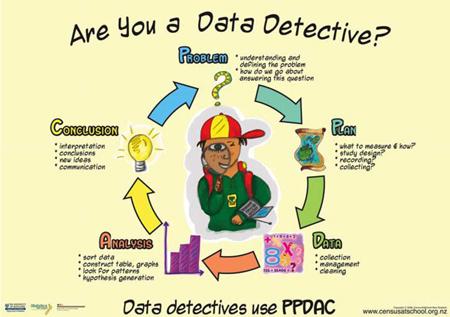
My Second student was Russel, and his post was about an exercise in Investigation. It was a rather simple project, but one he decided to take a bit of a humorous twist on it. He decided that he wanted to investigate how many burbs he and his father can do in 30 seconds. His father ended up winning. It was a good hands on project that demonstrated the skills of data collection and recording, and had the students create a slide presentation with their finding on it.
I did not get a third child, or if I did I miss them again....
C4T #4
For C4T I had the pleasure and joy of reading the blog of Scott McLeod titled Dangerously ! Irrelevant . So why is this a pleasure? For one, McLeod tackles some issues of technology, two of which I will mention here, and attempts to bring light to the darkness of technology in education. Much like Dr. Strange, McLeod is enthused about the use of technology in the classroom and wishes to see it grow to its greatest potential. However, he warns us of things that even in EDM 310 we have not been warned about.
This first one he warns us about is the over flooding of technology in the market. In his post 60 apps in 60 seconds we see what he means. He warns us that at education conventions and seminars that teachers go to they get bombarded with information quickly and often. This gets to the point where teachers can become easily overwhelmed with information and with apps that are no different then a previous version, they are just simply....new. The video gives a brief description with each app, but only from the view point of a teacher who sees it for the first time. Notice how there is no information, no quality discussion or lecture that goes with it......just apps. How many apps do we truly need for math? English? History? While it is true that usually the newest piece of technology is the best, is that the same for apps? With how easily they are made it is easy to accept that the newest app for education is no better, or different, then the previous one. He recommends that people who are creating apps spend less time working on quantity and more time on the quality of the presentation. It can also be said that teachers should indeed do their research and look at the apps before deciding to use them or change to them, they may not be worth the time.
The second blog post, titled Replication or Empowerment, talks about how we have to decide how we want technology to advance in the class. He says "We’ve got to decide if our vision for educational technology is around replication or empowerment. And if it’s about empowerment, then guess what? We’ve got to give up the things that we do that feed replication. We can’t hang on to all of those and get to where we’re trying to go." I'm not sure what he means by Replication vs. Empowerment, but he puts up a video (shown below) of a TEDTalk that he did where he talks about Fear vs. Empowerment. The basic idea of the talk is that we can't be afraid of technology or what they can do. He says that we do everything in our power to get the technology into the hands of students, but then do everything we can to limit what they can do with them. There is such a thing as to much protection, to where you limit the tools that technology is suppose to be. He talks about how kids, from ages 8 to 15, are using technology in ways to help change the world. From a Foodie Blog in Scotland that rates her school's lunch food to a boy who does his own voice over play through of Pokemon games. He points out that there are millions of kids like this in the world, but they aren't allowed to do what they want with technology....because teachers and parents are afraid of what might go wrong, instead of empowering their students with the hopes that something goes right.
Sunday, April 20, 2014
Blog Post #13
Literature in the 21st Century World of Technology
Has technology changed the role of literature in our culture?
Here are some resources that you can use to get an idea. Research some of your own and write what you think about Literature in the 21st Century World of Technology.
Preserve Articles
10 Technologies that Changed Literature
Digital Literature
So how has technology changed the role of literature in our culture. To some people, the world has grown to the point that literature is no longer a necessary part of our culture. With science and math as the forerunners in school and in the job markets, what good does art, music and literature do for a person? According to the article Role of Literature in Technological World "Science provides knowledge and power and both science and technology affect human life at several points, though the extent and utility of the applications are determined by our culture, our wisdom and our priorities. Literature reflects the moods and emotions of the times in which it is produced; it is conditioned by the reflexes which, in turn, are created by the impact of science and technology." Here we see that Science and Literature are on two separate paths, and some say that traveling down one path closes the other. However, we must remember that technology is not a new term. Technology has changed the way literature has been handled for generations. The website 10 Technologies that Changed Literature gives a clear view that some of the things we take for granite helped shape Literature as we know it, so it would make sense that the technology we are seeing today is just the next step in that. Literature, Art and Music will always be apart of our culture and our society, even if it seems that they are fading away. With the advancement of Science and Math new technologies are being created that can be used to help expand them.
Sunday, April 13, 2014
Blog Post #12
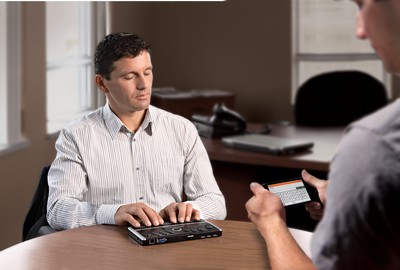
What assistive technologies are available to you as a teacher? That is a great question, and one that deserves a bit more attention then a single blog post can give. However, the first step to this is to understand what assistive technologies are. So, what are they? According to that Assistive Technology Industry Association, ATiA, Assistive technology is "any item, piece of equipment, software or product system that is used to increase, maintain, or improve the functional capabilities of individuals with disabilities". They are quick to let us know that assistive technologies can be anything from low tech communication boards made of fuzzy felt to specialized curricular software. They state that making the decision on what assistive technologies you use is not a decision made by yourself, but rather with a team of professionals and consultants. One of the things we can not let get in our way as teachers is the idea that we know everything. By doing that we could end up making a wrong decision that does not help the student, but could also hinder or hurt them in future education. So what is available for us to use as teachers? The fuzzy felt communication boards sound awesome, but not practical. The more practical tools are things like iPads and Tablet PCs. With programs that can read out event he names of the apps on the devices, it is getting to the point where technology will no longer be an issue for the deaf or the blind. However, it is still a struggle. In the video Teaching Mom What Her Deaf/Blind Child Is Learning On the iPad, we see that a mother is learning how to use an iPad in the way that her child would be using it. Despite being hilarious, it is a very informative video and shows the difficulties not only in operating the device, but also the difficulties in using the device in the ways necessary for some one with disabilities. In the video Teaching Math to the Blind we get to see how these assistive technologies are being used, and how they are making a difference to the students in the class room. It's scary to think of, but we may have to deal with students who need assistive technologies. While it is not our job to understand in full detail how they work, it is our job to be knowledgeable about them and how to incorporate them into our teaching.
Subscribe to:
Posts (Atom)